

 en
en






SPANIARDS REDISCOVER THE NEWS: CONFIDENCE RISES, BUT AI REMAINS ON THE SIDELINES

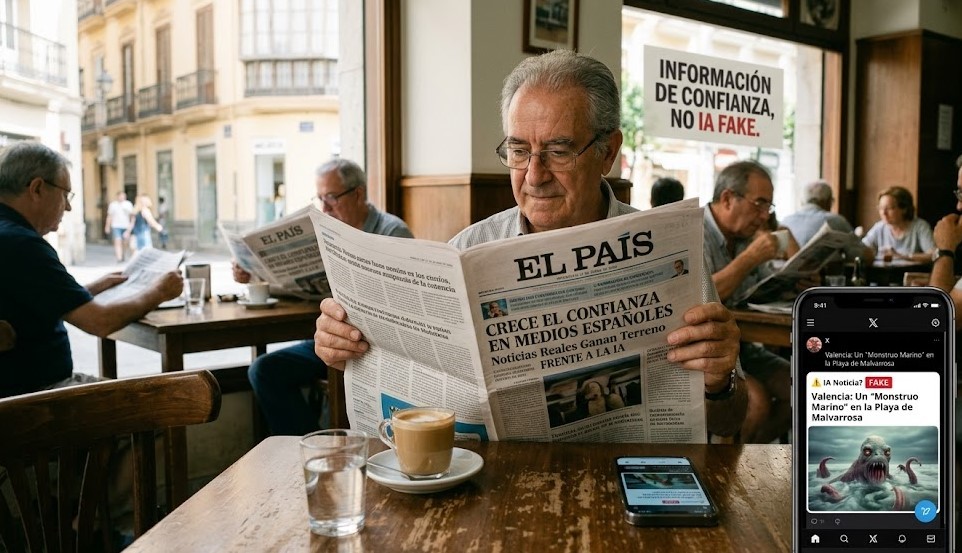
Spaniards Rediscover the News: Trust Rises, but AI Remains Sidelined
After a decade of declining interest and growing cynicism, the Spanish media landscape is experiencing a remarkable first. For the first time in ten years, interest in current affairs is rising again. While Spaniards embrace the latest technologies, they draw a hard line when it comes to reliable information: established media are gaining ground, while AI chatbots and influencers are left behind.
This is revealed by the authoritative annual study on news consumption by the Reuters Institute (University of Oxford) and the Universidad de Navarra, published on June 16, 2026.
The Great Turnaround: Why Spain is Consuming News en Masse Again
The most striking figure from the report is the renewed hunger for news. No less than 54% of Spaniards indicate they are highly interested in current affairs,...an increase of three percentage points compared to 2025 and the highest score in four years.
With this comeback, Spain shoots up the international rankings: from sixteenth to seventh place out of the 48 countries studied.
Who is tuning back in?
- The Digitalizing Senior: The largest increase is seen among those aged 65 and over and the 35-to-44 age group (both +7%). Spanish seniors are more active online than ever. Although they enthusiastically use AI tools for health queries, for example, they overwhelmingly return to traditional brands for their daily news.
- The 'Ninis Informativos': Yet, a persistent blind spot remains. Among young people (under 25), more than half show hardly any interest or trust in the news. The researchers aptly label this group ninis informativos: the informative dropouts.
AI and Social Media: Popular, but Not Trustworthy
A fascinating paradox exists in Spain. Spaniards lead the way in Europe when it comes to embracing artificial intelligence (AI). Yet, they refuse to use the technology as a compass for truth.
While general trust in the news rises to 33% (and even 42% for the media people choose themselves), AI scores dramatically low.
| News Source | Trust Percentage (2026) |
| Major Spanish news brands | 45% |
| Self-chosen media | 42% |
| General news | 33% |
| Search engines | 27% |
| Social media & AI chatbots | 19% |
So, while Spaniards are fully experimenting with AI, as soon as it comes to hard facts, traditional journalists remain the gatekeepers.
The Media Landscape: Who are the Winners of 2026?
The Spanish digital media landscape is fragmented, but a number of iconic names continue to set the tone.
The most read digital media
The leader is the digital edition of El País, which celebrates its golden 50th anniversary in 2026. The newspaper is closely followed by elDiario.es, El Mundo, and the free giant 20Minutos. RTVE Noticias and OKDiario also attract millions of readers, followed by established names such as Antena3, Marca, El Confidencial, El Español, La Vanguardia, and ABC.
The most trusted brands
Reading is one thing, believing is another. When it comes to pure trust, Spaniards point to a clear top group: 20Minutos, ABC, Antena3, Cadena SER, COPE, El Mundo, and El País are seen as the most solid beacons in the sea of information.
The Influencer Paradox: Entertainment versus Journalism
A relatively new phenomenon in the report is the rise of the content creator. No less than 40% of Spaniards consumed news via influencers, opinion makers, or vloggers in the week of the study. They are particularly dominant on platforms like Instagram (which is experiencing massive growth), TikTok, YouTube, and WhatsApp.
The public often finds these creators more accessible, personal, and entertaining than the traditional press. However, there is no question of them replacing journalism. On crucial journalistic core values—reliability, expertise, and impartiality—traditional media win hands down. This also translates to the wallet: if Spaniards pay for online news, they do so almost exclusively with official news organizations, not with influencers.
The Fear of Bulos: Record High in Disinformation
Behind the recovery of the media lies a deeper fear. A staggering 74% of Spaniards are seriously concerned about separating fact from fiction online. This is a five percentage point increase compared to last year and the highest level since measurements began.
The Spanish 'Bulo'
Nearly half of Spanish internet users admit they cannot always recognize fake news (bulos). Since six out of ten Spaniards find their news via algorithms (social media and news aggregators), the potential for manipulation is high.
The Spanish government has since announced strict measures to crack down on disinformation and the spread of fake news on social media.
Conclusion
In a world flooded with AI-generated content and viral fake news, the established Spanish press acts as an anchor. The Spanish public is seeking nuance again—and is willing to pay for it from brands that deliver quality.
Do you have a favorite Spanish news source yourself, or do you recognize the skepticism towards AI news in your own environment?
Image gallery



Share