

 en
en






THE BEST CLIMATE IN SPAIN: WHAT DO THE METEOROLOGICAL EXPERTS SAY?
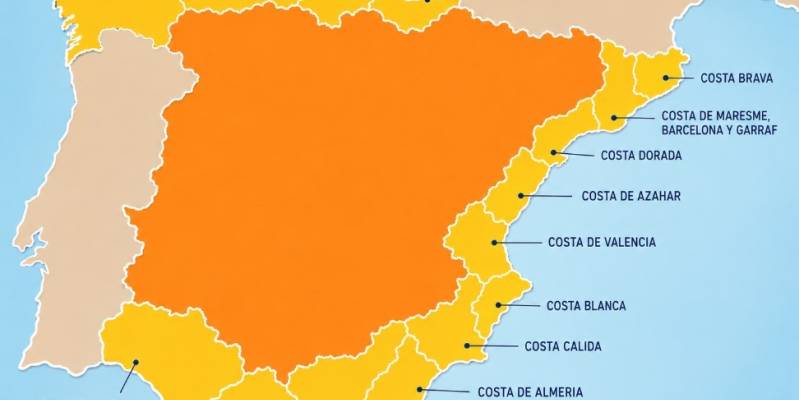
WHICH SPANISH COSTA HAS THE BEST CLIMATE?
The Final Comparison: What Do the Climate Data Say?
After comparing all major Spanish coastal regions based on average annual temperature, annual sunshine hours, and average precipitation, a clear picture emerges. Although each coastal region has its own character, there are several areas that consistently score high across all objective climate indicators.
Our comparison is based on long-term climate data from:
- AEMET (Agencia Estatal de Meteorología)
- Meteoblue
- WeatherSpark
- El Tiempo
These organizations publish climate normals and historical data that provide a reliable overview of the different climate zones in Spain.
Comparison of All Costas
| Costa | Avg. Temp. | Sunshine Hours | Precipitation | Climate Profile |
|---|---|---|---|---|
| Canary Islands | 21–22 °C | ±3,000 hrs | 100–300 mm* | Subtropical |
| Costa de Almería | 19–20 °C | ±3,050 hrs | 180–250 mm | Hot and very dry |
| Costa Cálida | 19–20 °C | ±3,000 hrs | 250–320 mm | Hot Mediterranean |
| Costa Blanca | 19–20 °C | ±2,950 hrs | 300–400 mm | Mild Mediterranean |
| Costa del Sol | 18–19 °C | ±2,950 hrs | 450–600 mm | Sheltered Mediterranean |
| Costa Tropical | 18–19 °C | ±2,900 hrs | 350–500 mm | Mediterranean microclimate |
| Costa de la Luz | 18–19 °C | ±3,100 hrs | 500–700 mm | Atlantic |
| Costa de Valencia | 18.5–19.5 °C | ±2,800 hrs | 450–500 mm | Mediterranean |
| Costa del Azahar | 18–19 °C | ±2,800 hrs | 400–500 mm | Mediterranean |
| Costa Dorada | 17–18 °C | ±2,800 hrs | 500–600 mm | Temperate Mediterranean |
| Costa de Ponent | 16–17 °C | ±2,600 hrs | 550–650 mm | Northern Mediterranean |
| Costa Brava | 16–17 °C | ±2,550 hrs | 600–750 mm | Northern Mediterranean |
* Rainfall varies greatly depending on the island.
Which Costa Has the Most Sun?
Based on the available climate data, the following regions are among the sunniest in Spain:
- Costa de la Luz
- Costa de Almería
- Canary Islands
- Costa Cálida
- Costa Blanca
For sunseekers, these are the most appealing regions.
Which Costa Has the Least Rain?
The driest regions are:
- Canary Islands (depending on the island)
- Costa de Almería
- Costa Cálida
- Costa Blanca
- Costa Tropical
Low rainfall generally means more dry days and a higher number of days suitable for outdoor activities.
Which Costa Has the Warmest Winters?
For winter residents and permanent inhabitants, winter temperatures are of particular importance. On average, the mildest winters are found in:
- Canary Islands
- Costa de Almería
- Costa Cálida
- Costa Blanca
- Costa del Sol
Which Costa Has the Most Pleasant Summers?
Not everyone is looking for the highest summer temperatures. Many people prefer a warm yet comfortable climate. Regions where sea breezes frequently provide cooling include:
- Costa Blanca
- Costa del Sol
- Costa Tropical
- Costa de la Luz
Conclusion Per Costa
- Canary Islands: Ideal for anyone looking for a stable subtropical climate year-round, with very mild winters and plenty of sun.
- Costa de Almería: One of the warmest and driest regions on the Spanish mainland. Particularly suitable for people who place great value on abundant sunshine and minimal rain.
- Costa Cálida: An excellent combination of warm temperatures, high sunshine hours, and relatively low precipitation. An attractive choice for permanent residence.
- Costa Blanca: Offers a very strong balance between climate, accessibility, infrastructure, and quality of life. As a result, this region has been popular with international residents for years.
- Costa del Sol: A classic among Spanish coasts with a mild climate, plenty of sun, and excellent infrastructure.
- Costa Tropical: Thanks to the local microclimate, this region enjoys mild winters and very pleasant weather. A great choice for those who appreciate peace and nature.
- Costa de la Luz: A sunny Atlantic coast with broad beaches, mild temperatures, and more wind and precipitation than the Mediterranean coast.
- Costa de Valencia: A vibrant region combining a pleasant Mediterranean climate with the amenities of a major city.
- Costa del Azahar: A peaceful coast with a classic Mediterranean climate and a balanced ratio of sun, temperature, and nature.
- Costa Dorada: An attractive region for families and active people, featuring warm summers and a slightly cooler winter climate.
- Costa de Ponent: A good choice for those who wish to live close to Barcelona while still enjoying the Mediterranean Sea.
- Costa Brava: Renowned for its impressive coastal landscapes, coves, and nature. The climate is cooler and wetter than on the southern coasts.
General Conclusion
Every Spanish coast has its own character and climate. There is no universal "best" Costa; the ideal choice depends on personal preferences and individual lifestyle.
Looking purely at the combination of average annual temperature, sunshine hours, and precipitation, the Canary Islands, Costa de Almería, Costa Cálida, and Costa Blanca emerge as the strongest regions based on these objective climate factors.
Those who prefer a more temperate climate with slightly cooler summers will find excellent alternatives along the Costa del Sol, Costa Tropical, Costa de Valencia, or the Mediterranean coasts located further north.
Frequently Asked Questions (FAQ)
Which Spanish Costa has the most sun?
The Costa de la Luz, Costa de Almería, and the Canary Islands are among the sunniest regions in Spain.
Where falls the least rain?
The driest areas are the Canary Islands (depending on the island), followed by the Costa de Almería and Costa Cálida.
Which Costa has the mildest winters?
The Canary Islands record the highest average winter temperatures. On the mainland, the Costa de Almería, Costa Cálida, Costa Blanca, and Costa del Sol are among the mildest regions.
Which Costa is best suited for wintering?
That depends on personal preferences. Regions with abundant sunshine, mild winters, and relatively low rainfall are highly sought after by winter residents.
Is the climate the same everywhere in Spain?
No. Due to differences in latitude, altitude, distance from the sea, and local geography, there are distinct climatic variations between the individual coastal regions.
Closing Remarks
Climate is one of the most critical factors when selecting a property in Spain. By objectively comparing the different coastal regions based on temperature, sunshine hours, and precipitation, you gain a realistic picture of each Costa's strengths.
Whether you are looking for a sunny holiday home, an investment property, or a permanent residence—a solid understanding of the local climate will help you make an informed decision tailored perfectly to your preferences and lifestyle.
Share