
 en
en


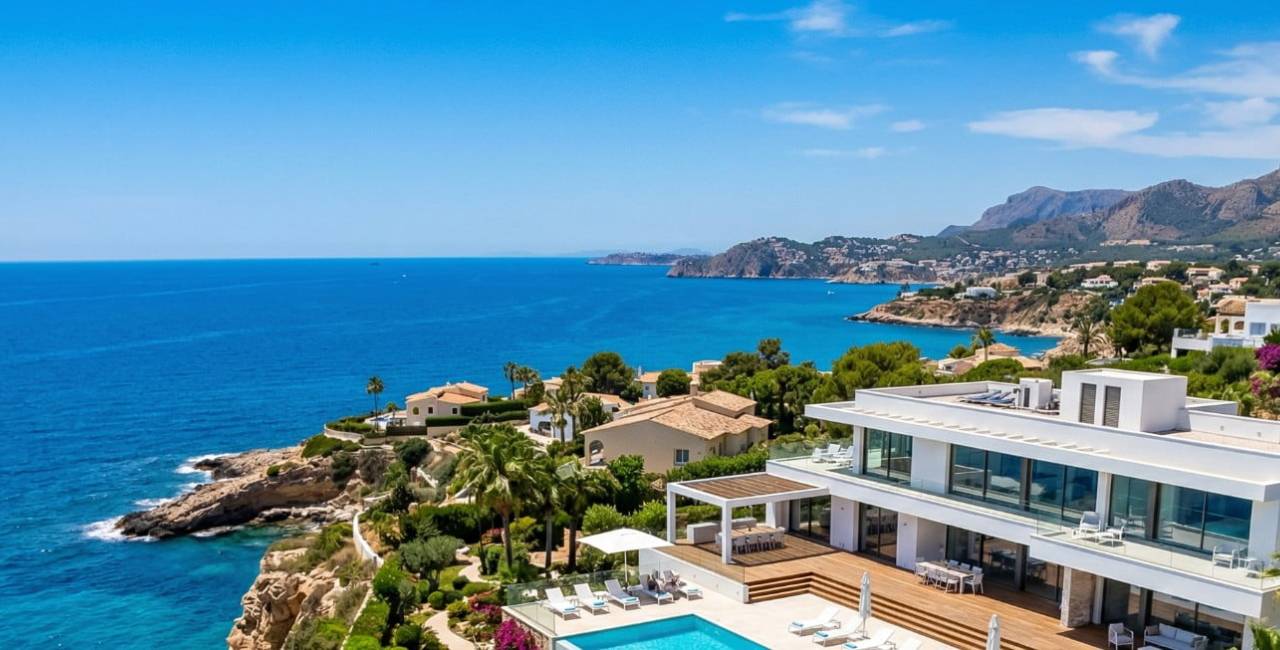


Description
The Ultimate Guide to Calpe: From Historic Fishing Village to Pearl of the Costa Blanca
Calpe (in Valencian: Calp) is one of the most iconic and versatile coastal towns in the province of Alicante. Located in the Marina Alta region on the northern Costa Blanca, Calpe offers a unique blend of impressive nature, centuries-old history, culinary delights, and modern infrastructural appeal.
1. The Origins and History of Calpe
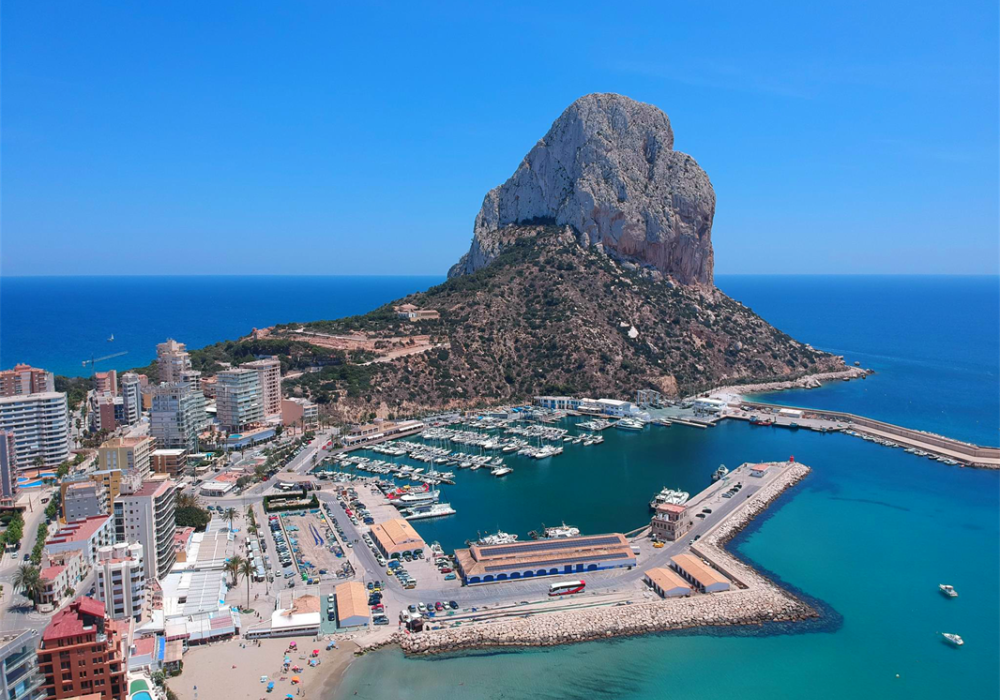
The origin of Calpe is inextricably linked to its strategic location on the Mediterranean Sea and the imposing limestone rock Peñón de Ifach (332 meters high), which has historically served as a natural lookout point and navigation beacon for sailors.
Earliest Inhabitants and Antiquity
The earliest traces of human presence date back to the Bronze Age and the Iberian culture. The Iberians established their settlements on the slopes of the Peñón to spot incursions from the sea early on.
During Roman rule, the region grew into an important commercial and logistical center. The Romans discovered the strategic value of the bay and founded a thriving fish-salting and salt industry. From this period originate the archaeological remains of the Baños de la Reina (Baths of the Queen), a complex of rock-cut basins used to keep live fish and produce fish paste (garum).
Middle Ages, Moors, and Pirate Attacks
After the Roman period, the area came under Islamic rule (the Moors). They introduced advanced agricultural and irrigation techniques. In the 13th century, King James I of Aragon (Jaime I) conquered the area during the Reconquista.
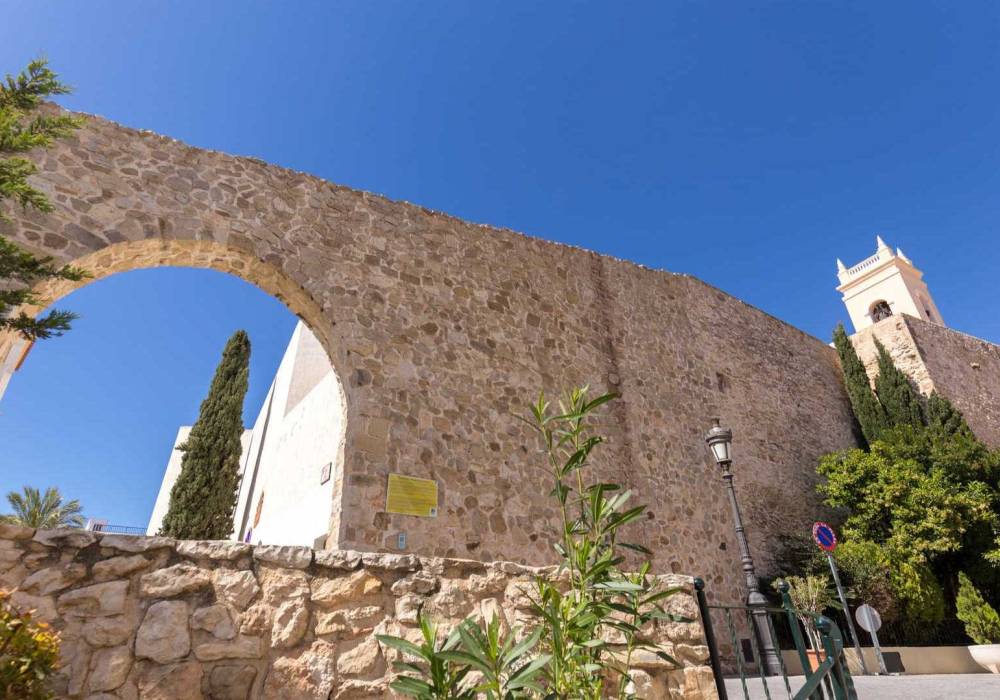
The following centuries were marked by the constant threat of Barbary pirates from North Africa. Because Calpe fell victim to frequent pillaging, the town was walled. In the 16th and 17th centuries, the defensive structure was reinforced with watchtowers such as the Torre de la Peça. Only in the 19th and 20th centuries did the sleepy fishing and agricultural village gradually transform into one of the major tourist destinations on the Spanish east coast.
2. Demographics: Who Lives in Calpe Today?
Calpe has over 25,000 to 26,000 registered residents, but during the summer months, this number swells to over 100,000 due to tourism.
The most striking demographic feature is its international diversity:
- International character: More than 45% to 50% of the registered population holds a non-Spanish nationality.
- Largest communities: British, German, Belgian, Dutch, French, and Scandinavian. In addition, there is a growing group of Eastern European and Latin American residents.
- Resident profile: Calpe attracts a healthy mix of active retirees (expats enjoying their retirement), digital nomads, entrepreneurs in the service sector, and local Spanish families.
3. The Climate of Calpe Compared to the Surroundings
Calpe has a microclimate recognized by the World Health Organization (WHO) as one of the healthiest in the world.
Geographic Protection
Thanks to the surrounding mountain ranges—the Sierra de Bernia massif in the hinterland—Calpe is protected from the cold northern winds coming from the interior.
Climate Comparison with Surrounding Cities
| Region / City | Climate characteristics compared to Calpe |
| Calpe | Mild winters (avg. 16–18 °C daytime), warm but not extremely hot summers (avg. 29–31 °C). Over 300 sunny days per year. Relatively low rainfall and very favorable humidity. |
| Denia & Jávea | Located on the north side of the Montgó massif. As a result, they experience more clouds and rainfall in winter than Calpe. |
| Altea & Benidorm | Share largely the same favorable microclimate as Calpe, although low-lying Benidorm can feel slightly more humid in midsummer due to high urban density. |
| Valencia / Alicante (Cities) | Experience larger temperature fluctuations and significantly more heat inland during July/August compared to Calpe's coastal climate. |
4. Accessibility and Distances
Calpe is easily accessible via the AP-7 highway (Autopista del Mediterráneo) and the N-332 national road.
- Alicante-Elche Airport (ALC): approx. 75 km (~50-55 minutes drive).
- Valencia Airport (VLC): approx. 125 km (~1 hour and 15 to 20 minutes drive).
- Altea: 11 km (~15 minutes).
- Moraira: 12 km (~15-20 minutes via the scenic coastal road).
- Finestrat / Benidorm: 25 km (~20-25 minutes).
- Denia: 35 km (~30-35 minutes).
In addition, Calpe has a station on the narrow-gauge railway TRAM Metropolità d'Alacant (Line 9), connecting Calpe with Alicante, Benidorm, Altea, and Denia.
5. Sports, Water Sports, and Golf
Calpe is a paradise for sports enthusiasts and is internationally renowned for its outdoor sports infrastructure.
Professional Cycling and Biking
In the winter and spring months, Calpe becomes the world capital of professional cycling. Almost all major WorldTour teams (such as Visma-Lease a Bike, Quick-Step, UAE) set up training camps here. The combination of excellent asphalt, respectful drivers, and challenging climbs in the hinterland (such as the Coll de Rates and the Sierra de Bernia) makes the area ideal for cyclists.
Water Sports
Thanks to two large marinas—Real Club Náutico de Calpe and Puerto Blanco—and sheltered bays, you can practice numerous water sports in Calpe:
- Sailing and Powerboating: Lessons and boat rentals in the marina.
- Windsurfing, Kitesurfing, and Wing Foiling: Popular at Arenal-Bol beach.
- Kayaking and SUP (Stand-Up Paddleboarding): Ideal for exploring the hidden caves around the Peñón de Ifach.
- Diving and Snorkeling: The marine reserve around the Peñón offers clear waters rich in marine life (octopuses, groupers, seagrass meadows).
Golf Courses in the Immediate Surroundings
Although Calpe itself does not have an 18-hole golf course within its municipal borders, fantastic courses are located a short drive away:
- Club de Golf Ifach (Benissa): Just 10 minutes from Calpe. A challenging 9-hole course with panoramic views of the Peñón de Ifach.
- Golf Jávea: 9-hole course approx. 20 minutes away by car.
- Altea Club de Golf (Don Cayo): Beautiful 9-hole course at the foot of the Sierra de Bernia (15 minutes).
- Meliá Villaitana Golf (Benidorm): Two Jack Nicklaus-designed 18-hole courses (Championship & Executive) approx. 20 minutes drive.
- La Sella Golf (Denia): An exclusive 27-hole course designed by José María Olazábal (30 minutes).
6. Culture, Sights, and "What to Do"
Sights in Calpe
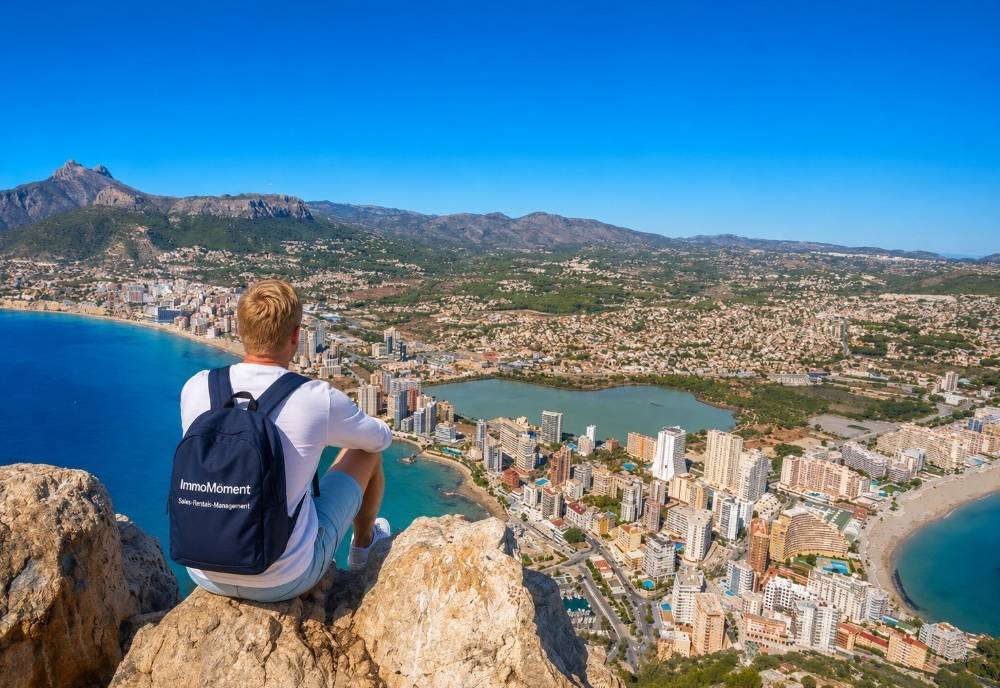
- Peñón de Ifach: The symbol of the Costa Blanca. A protected natural park that can be climbed via a carved trail (featuring a tunnel through the rock) for a spectacular 360-degree view.
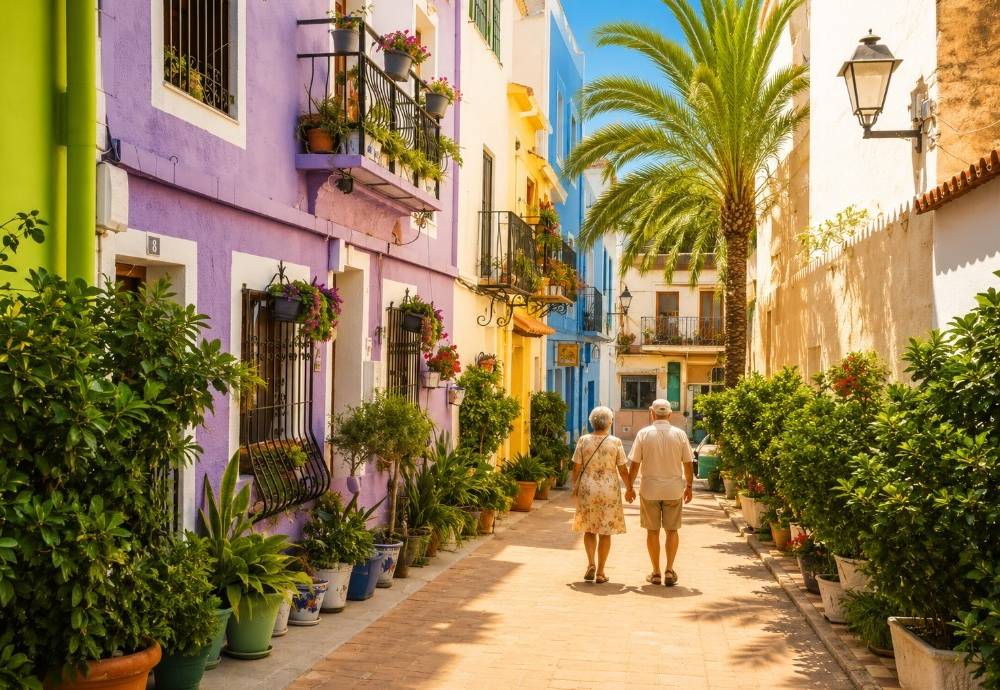
- Casco Antiguo (Old Town): A charming network of narrow cobblestone streets, colorful murals, decorated staircases (such as the famous Calle Gabriel Miró), and historic squares.
- Baños de la Reina: Roman archaeological site located directly by the sea.
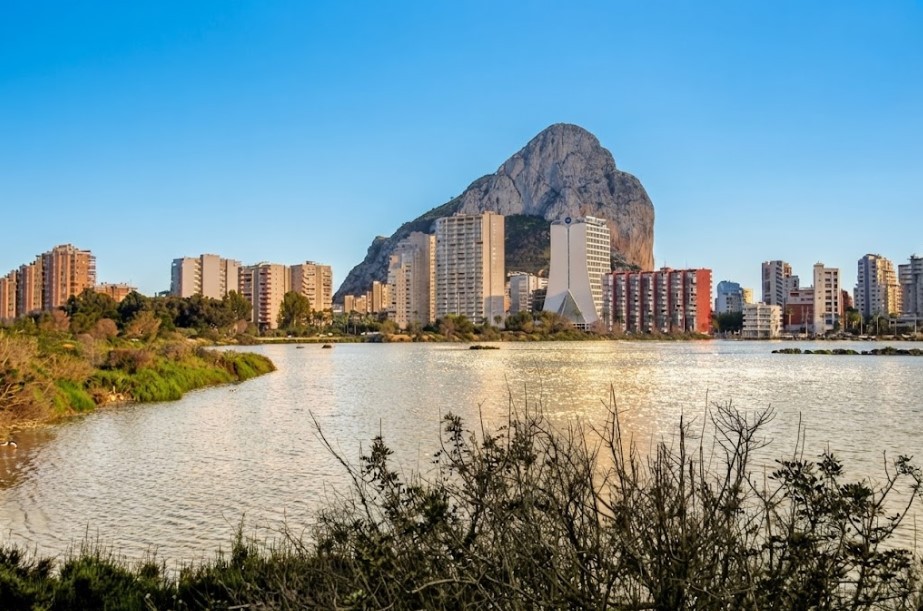
- Las Salinas: A natural salt flat in the heart of the town center, home year-round to large colonies of wild flamingos and other migratory birds.
- La Muralla Roja: The iconic pinkish-red postmodern apartment complex designed by famous architect Ricardo Bofill on the cliffs of La Manzanera.
- Torre de la Peça & Old Town Walls: Remains of medieval defensive fortifications.
Markets
- Weekly Traditional Market: Every Saturday morning (on Avenida de Rumanía). Here you'll find fresh vegetables, fruit, clothing, leather goods, and local delicacies.
- Flea & Antiques Market (Rastro): Every Wednesday morning near Avenida del País Valencià.
- Culinary / Fish Auction: From Monday to Friday in the late afternoon, the traditional fish auction takes place at the harbor fish market (La Lonja).
What Fish is Caught?
Calpe has an active fishing fleet. Daily fresh catches are brought ashore and head directly to local restaurants:
- Gamba Roja de Dénia/Calpe: The famous sweet red shrimp.
- Gilt-head Bream (Dorada) and Sea Bass (Lubina): Widely caught or farmed in clean waters.
- Squid (Calamar), Cuttlefish (Sepia), and Octopus (Pulpo): Essential for local dishes like Arros de Senyoret or Guiso de Pulpo.
- Hake (Merluza), Grouper (Mero), and Norway Lobster (Cigalas).
7. Gastronomy: Top Restaurants
Calpe is gastronomically renowned for its high-quality cuisine, ranging from traditional rice and fish restaurants at the port to international Michelin-starred establishments.
Gastronomic Highlights
- Beat (1 Michelin Star): Located in the AR Diamante Beach Hotel. Chef José Manuel Miguel serves refined French-Mediterranean haute cuisine.
- Audrey's by Rafa Soler (1 Michelin Star): High-end interpretations of traditional Valencian cuisine using local regional products.
- Orobianco: A fine-dining Italian restaurant set on Calpe's hills with impressive sea views and exquisite dishes.
- Restaurant Puerto Blanco: Situated by the idyllic marina of the same name; known for its elegant Mediterranean/French menu and charming garden.
- High-Quality Fish & Rice Restaurants at the Port: Such as El Cantal, Baydal, and Abiss, where you can enjoy authentic Arroz a Banda or salt-crusted fish.
8. Education and Schools
For families settling permanently in Calpe, the educational infrastructure is very well organized:
- Spanish Public & Semi-Private Schools:
- CEIP Azorín, CEIP Gabriel Miró, CEIP Oltà (Primary schools).
- IES Ifach (High school / Instituto).
- International Schools in the Surroundings:
- Lady Elizabeth School (Cumbre del Sol, Benitachell): Approx. 15-20 minutes drive. One of the most prestigious British international schools in Spain (ages 2 to 18).
- Xàbia International College (Jávea): Approx. 25 minutes drive.
- Lope de Vega International School (Benidorm): Approx. 20 minutes drive.
9. Why Vacation in Calpe?
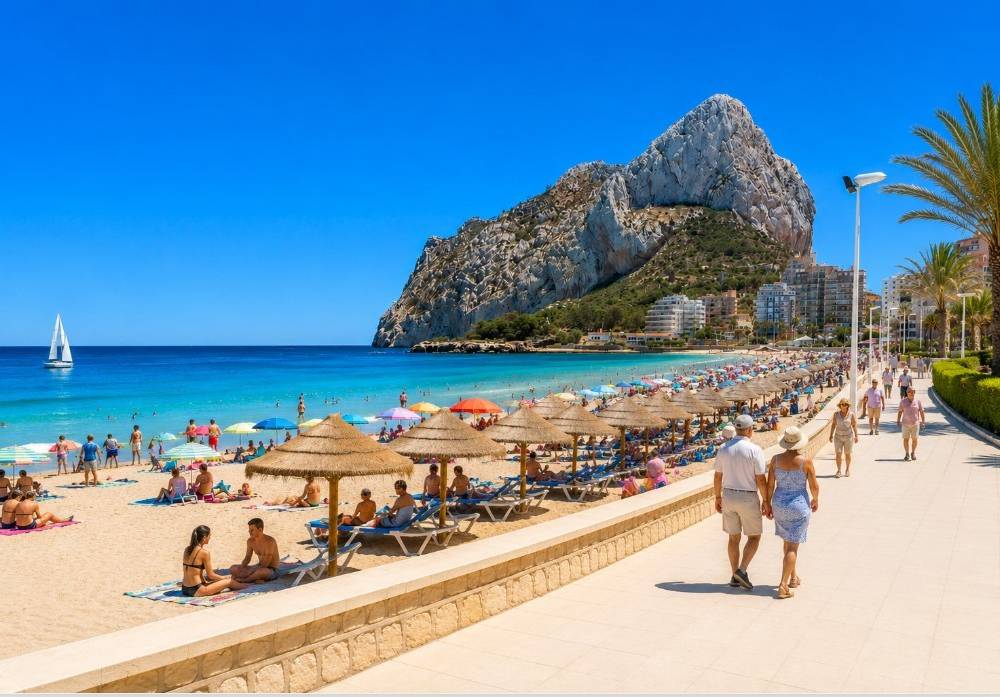
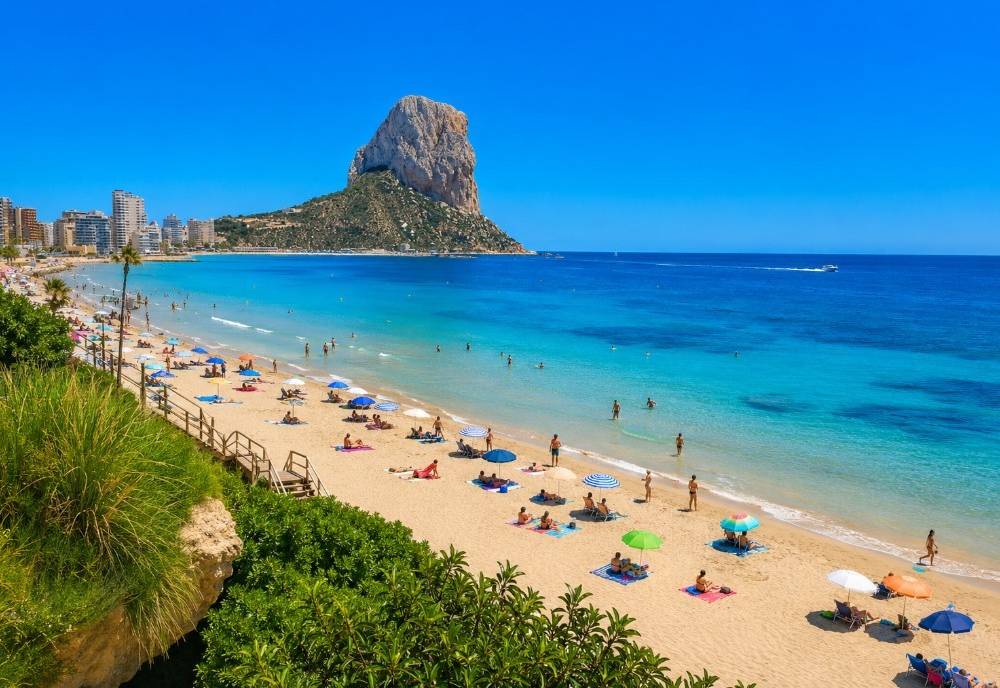
- Perfect Sandy Beaches: Two broad, award-winning Blue Flag sandy beaches (Playa del Arenal-Bol and Playa de la Fossa/Levante) with fine sand and calm waters.
- Impressive Backdrop: The omnipresent Peñón de Ifach gives the town a photogenic and unique character.
- Fun for All Ages: Excellent promenades, safe swimming zones, water sports, nearby theme parks (Mundomar, Terra Mítica in Benidorm 20 mins away), and active nature.
- Culinary Delights: From affordable tapas to Michelin dining within walking distance.
10. Why Living, Buying, or Renting in Calpe is Attractive
The real estate market in Calpe has been stable for years, showing healthy value appreciation.
Advantages of Living in Calpe
- 365-Day Living: Unlike purely seasonal villages, Calpe has a solid permanent population. Supermarkets, medical centers, hospitals (such as Hospital IMED Levante 20 mins away or Hospital de Dénia), and shops remain open year-round.
- Versatile Neighborhoods:
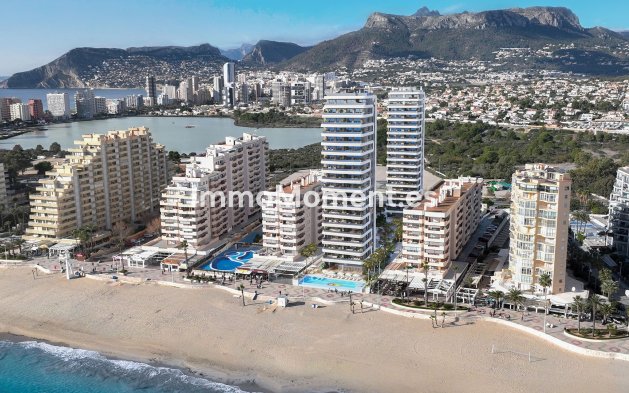
- Beach/Center: Modern high-rise apartments with sea views and all amenities within walking distance.
- Maryvilla, Canuta, Cometa, Ortenbach, Enchinent: Quiet villa districts featuring detached villas, private pools, and panoramic views of the sea and rock.
- Real Estate & Investment:
- Rental Yield: Due to constant demand for summer vacation rentals alongside cycling teams, winter residents, and expats during the low season, Calpe real estate offers strong year-round rental yields.
- Value Retention: The scarcity of buildable land near the coastline and natural park ensures prime-location properties maintain their value well and continue to appreciate.
Calpe offers a diverse real estate portfolio. The landscape rises from broad coastal sandy beaches to rolling hills and cliffs. Consequently, atmospheres, property types, and price tiers vary significantly by neighborhood.
Below is a detailed overview of the main residential areas in Calpe, their characteristics, and market profile.
1. Neighborhood Breakdown: Characteristics & Vibe
A. Maryvilla
- Location: On the southwest side of Calpe, built along the slopes of the Sierra de Toix.
- Vibe & Property Types: One of Calpe’s oldest and most iconic villa residential areas. Primarily consists of detached villas and terraced bungalows built on steep hillsides.
- Pros: Thanks to its elevated position, nearly every home offers spectacular panoramic views of the Mediterranean, Calpe’s skyline, and the Peñón de Ifach. Direct access to small, quiet coves like Cala Les Urques.
- Cons: Roads are steep and narrow, making a car essential. Some older villas require thorough renovation.
B. La Canuta / Canuta Baja & Canuta de Ifach
- Location: Situated between Maryvilla and the city center/Puerto Blanco marina.
- Vibe & Property Types: A highly sought-after, elegant residential district. Canuta Baja lies within walking distance of the sea and the revamped marina, while Canuta de Ifach sits slightly higher up the hill.
- Pros: Excellent orientation (plenty of sunshine), quiet environment, yet close to the city center, beaches, and harbor.
- Cons: Scarce supply as many residents live here permanently.
C. El Tosal & Manzanera
- Location: West of the old town, close to the coastline.
- Vibe & Property Types: A charming, artistic neighborhood featuring a blend of authentic Spanish villas, townhouses, and iconic apartment complexes (such as the famous La Muralla Roja by architect Ricardo Bofill).
- Pros: Walking distance to the old town and beach while benefiting from a tranquil residential feel and sea views.
- Cons: Architectural heritage complexes often have strict renovation guidelines.
D. Enchinent, Garduix & Ortenbach
- Location: Flat to gently sloping zones located right behind the salt lakes (Las Salinas) and city center.
- Vibe & Property Types: Very popular, established residential neighborhoods with detached villas on spacious plots. Home to many permanent international residents and local Spanish families.
- Pros: Flat streets (ideal for walking or cycling), extremely close to major supermarkets, schools, Arenal-Bol beach, and downtown. Great infrastructure with mains sewage and fiber internet.
- Cons: Not every spot offers direct sea views due to flat terrain, though location and convenience easily compensate.
E. Gran Sol, Cometa & Carrió
- Location: On the northeast side of Calpe, heading toward the Benissa border.
- Vibe & Property Types: Peaceful, green, and spacious villa communities featuring classic Mediterranean villas alongside sleek modern new-build homes with private pools.
- Pros: Good south/southwest exposure, high privacy, beautiful views of the countryside and mountains (with sea views from higher elevations).
- Cons: Approx. 5 to 10 minutes drive to beaches and supermarkets.
F. Playa del Arenal-Bol & Playa de la Fossa (Center & Coastline)
- Location: The main boardwalk and first/second line of the two main sandy beaches.
- Vibe & Property Types: High-rises and modern apartment complexes offering the ultimate "beach & city lifestyle."
- Pros: Everything within walking distance: beach, dining, shopping, and healthcare. High demand for holiday rentals ensuring strong, steady returns.
- Cons: Busier and livelier during summer months; parking usually requires a private garage or designated space.
Calpe and its surroundings offer an impressive selection of hiking trails, ranging from steep mountain tracks with dramatic rock formations to relaxed coastal paths along cliffs and bays.
Here are the finest and most popular hiking routes in and around Calpe:
1. Ascent of the Peñón de Ifach (PR-CV 369)
Calpe’s classic hike. The iconic limestone rock towers 332 meters above the Mediterranean Sea and is a protected natural park.
- Distance: approx. 4.8 km (round trip)
- Duration: 2.5 to 3.5 hours
- Difficulty: Moderate to hard
- Elevation Gain: ±300 meters
The Route
- First Section (Up to the tunnel): A well-maintained, gradually sloping dirt path with wooden handrails. Suitable for almost everyone, leading to the visitor center and tunnel entrance.
- Second Section (After the tunnel to the summit): Past the tunnel, the terrain changes dramatically. You’ll climb over polished rocks equipped with ropes and chains attached to the cliff face for support. Reaching the peak rewards you with breathtaking 360-degree views over Calpe, the salt lakes, the coastline toward Benidorm, and even Ibiza on clear days.
- Important Tip & Rules: Sturdy footwear (hiking boots) is mandatory past the tunnel. To protect nature, daily visitor caps apply. You must book a free permit in advance via the official website of the Red de Parques Naturales de la Comunitat Valenciana.
2. The Bernia Loop (PR-CV 40 / Forat de Bernia)
Located about 20 minutes drive from Calpe in the Sierra de Bernia, this hike is regarded as one of the most spectacular mountain routes on the entire Costa Blanca.
- Distance: approx. 9.5 km (loop)
- Duration: 3.5 to 4.5 hours
- Difficulty: Moderate to hard
- Starting Point: Casas de Bèrnia (parking lot near the restaurants)
- Elevation Gain: ±400 meters
Highlights of the Route
- El Forat (The Tunnel): The ultimate highlight is passing through El Forat, a natural 20-meter tunnel cutting straight through the mountain ridge. You’ll need to crouch or crawl through. Emerging on the southern side reveals a jaw-dropping panoramic view over the coastlines of Altea, Benidorm, and Calpe.
- Fort de Bernia: On the southern side, you'll pass the ruins of a 16th-century fort built under King Philip II to prevent pirate raids and Moorish revolts.
- Varied Scenery: The loop takes you past sheer cliff faces, almond groves, and pine forests.
3. Paseo Ecológico de Benissa (Coastal Walk)
A beautiful, accessible, and relaxing coastal hike running directly from northern Calpe (near Cala de la Fusteria cove) to the border with Moraira.
- Distance: approx. 7 km (round trip)
- Duration: 1.5 to 2.5 hours
- Difficulty: Easy
- Elevation Gain: Minimal (flat with a few stairs)
The Route
This ecological coastal path is mostly paved or fitted with wooden boardwalks. Winding along Benissa’s rugged coastline, it passes picturesque coves like Cala Pinets, Cala Llobella, and Cala Advocat. Informational panels line the way highlighting local flora, fauna, and marine reserves. Perfect for family outings or sunset strolls with several beach bars (chiringuitos) along the path.
4. Ascent of Sierra de Toix
Located on Calpe's southern edge above the Maryvilla district. The Toix cliffs divide Calpe from neighboring Altea.
- Distance: approx. 4 to 6 km (depending on exact trail choice)
- Duration: 2 hours
- Difficulty: Moderate
- Elevation Gain: ±200 meters
The Route
Starting from Maryvilla’s highest point, follow an unpaved mountain track up toward the antennas and viewpoint (Mirador de Toix). From here, look straight down hundreds of meters into the Mediterranean Sea. Enjoy views of Altea Bay and Benidorm's skyline on one side, and all of Calpe with the Peñón de Ifach on the other. It’s also a renowned spot for paragliders and rock climbers.
5. Salt Lakes Walk (Las Salinas)
Ideal for those preferring a gentle, flat walk right in the center of town.
- Distance: approx. 3 km (around the lagoon)
- Duration: 45 minutes to 1 hour
- Difficulty: Very easy
- Terrain: Flat footpaths and wooden boardwalks
The Route
The salt lakes sit right in the heart of Calpe. A wooden walkway encircles the lagoon—a protected natural reserve where you can spot wild flamingos, herons, and numerous migratory waterfowl year-round. Great to combine with a visit to the nearby Roman ruins of Baños de la Reina.
Practical Hiking Tips for Calpe
- Season: Hiking the Peñón de Ifach or Bernia during July and August can be extremely hot. The best hiking months run from October through May.
- Footwear: Always wear sturdy hiking shoes with good grip for Peñón de Ifach, Bernia, and Toix. Limestone rocks can become very slippery.
- Water: Carry plenty of drinking water on mountain trails (at least 1.5 liters per person), as there are no drinking water stations along the way.
Images