

 en
en






SPAIN IS SPEEDING UP THE CONSTRUCTION OF MEGA-BATTERIES TO KEEP THE ELECTRICITY GRID STABLE
Spain has understood the warning.
Following the severe national power outage of April 2025, which painfully exposed how vulnerable a modern, green power grid can be, the country has entered a major energy transition sprint. Behind the scenes, a giant buffer is being built at record speed: large-scale battery storage systems (BESS - Battery Energy Storage Systems). Both national energy giants and international investment funds are pumping billions into Spanish storage capacity, backed by substantial government subsidies. But is it enough to permanently stabilize the Spanish grid?
The numbers speak for themselves. According to data from the Spanish Ministry for Ecological Transition and Red Eléctrica (MITECO) and specialized media such as Híbridos y Eléctricos, the capacity of approved and under-construction battery projects has skyrocketed in no time from a modest 25,000 kilowatts (kW) to over 221,000 kW, with plans now surpassing the gigawatt (GW) threshold.
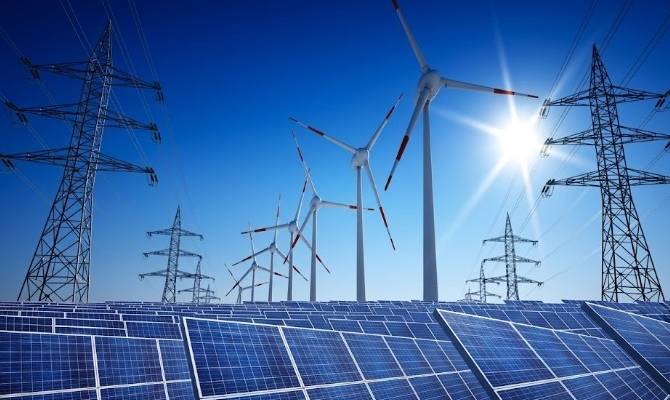
Why Spain has 'excess power' more often than it can handle As the absolute European frontrunner in solar and wind energy, Spain is dealing with a luxury problem also known as curtailment (the deliberate shutting off of green power). On sunny, windy days with low energy demand (such as weekends), Spanish solar farms and wind turbines mass-produce more electricity than the network can immediately transport or consume.
Without buffers, this valuable green power is simply lost. Furthermore, this phenomenon causes extreme price fluctuations on the Spanish energy market (pool), where the electricity price regularly plummets to zero euros (or even negative figures) during the day, only to shoot up again at night when the sun goes down and air conditioners turn on. Large battery fields are designed to smooth out this market: storing cheap power during the day and injecting it profitably in the evening.
Battery parks mushrooming across the country Spanish energy giants like Iberdrola, Endesa, and Naturgy, as well as large foreign infrastructure funds, are currently flooding the Spanish government with permit applications. The focus is logically on the Spanish regions with the highest solar intensity and the largest concentration of solar farms:
- Andalusía
- Castile-La Mancha
- Extremadura
The Spanish recovery plan, heavily financed by European PERTE subsidies, acts as a catalyst. The Spanish government has freed up hundreds of millions of euros in direct support for the installation of these mega-batteries. The goal? To become less dependent on polluting and expensive gas power plants that currently still have to step in as soon as the sun sets or the wind dies down.
What does this mean for (foreign) homeowners? For Belgians, Dutch, and British citizens with a (second) home on the Costa Blanca, Costa del Sol, or Costa Cálida, this is excellent news. The massive rollout of battery parks significantly reduces the risk of grid overload and local blackouts, even during extreme heatwaves in the summer months when millions of air conditioning units run at full capacity simultaneously.
The paradox of solar panels: Useless during a blackout? While the government focuses on mega-batteries, interest in home storage is growing among Spanish individuals and foreign residents. The market for solar panels has undergone a transformation. Whereas previously people purely looked at the panels on the roof, SpanjeVandaag reports that one in four new solar panel installations in Spain is now directly equipped with a physical home battery.
Yet, a major misconception still exists among consumers. Many homeowners think that they will automatically keep having power during a blackout thanks to their solar panels. Nothing could be further from the truth. Only 15 percent of all Spanish solar panel installations have a so-called emergency power supply (backup/inverter with island mode). Without this specific technology and a connected battery, a solar panel system immediately shuts down for safety reasons as soon as the mains power drops. The major power outage of 2025 proved this painfully: thousands of owners with solar panels still found themselves completely in the dark.
The rise of the 'Virtual Battery' In addition to the costly purchase of physical home batteries, Spain has recently undergone a digital revolution: the virtual battery (batería virtual). This administrative solution, offered by modern Spanish energy suppliers, is quickly gaining popularity among consumers.
The principle is simple: the excess power you generate during the day with your solar panels and do not consume immediately is sold back to the grid. Instead of a minimal cash compensation, its value in euros is parked in a 'virtual wallet'. You can then offset this accumulated buffer against your consumption at times when the sun is not shining (for example, at night). In many cases, solar panel owners manage to reduce their final energy bill—excluding fixed network fees—to exactly 0.00 euros thanks to this setup.
Conclusion: A stable, green future Spain is at the absolute forefront of the European energy transition. The accelerated deployment of mega-batteries at the national level, combined with the rise of home batteries and smart virtual contracts at the consumer level, forms the foundation for a modern and stable electricity grid. The country is rapidly transforming from a vulnerable power grid into a self-sufficient, green battery for Europe.
Share