

 en
en






AIR CONDITIONING IN SPAIN: THE SECRET TO A HEALTHY AND ENERGY-EFFICIENT HOME THAT FEW BUYERS ARE AWARE OF
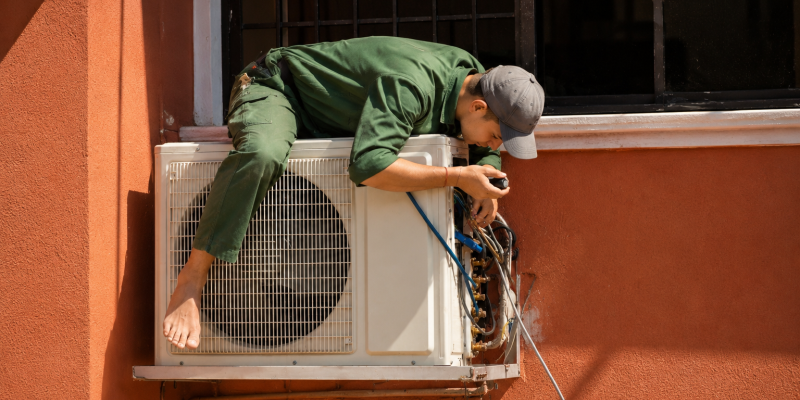
Worry-Free Enjoyment of the Spanish Sun: The Ultimate Air Conditioning Advice for Your Dream Home
Are you dreaming of a luxury villa or a stylish apartment on the Costa Blanca, Costa Cálida, or Costa del Sol? Then there is one installation in the house that is essential for your comfort: the air conditioning.
Because we at ImmoMoment have been living on the Spanish coast ourselves for over 20 years, and as a licensed BIV estate agent sell and rent out villas and apartments daily, we know the Spanish climate like no other. Unfortunately, in practice, we often see tenants setting the temperature far too low, or buyers of a resale property forgetting to maintain their unit for years.
How do you use air conditioning in a truly healthy and energy-efficient way? When should you replace a unit, and what do doctors and air conditioning manufacturers say about this? We break down the science and practical experience for you!
1. New Build vs. Resale: Check Your Unit!
When purchasing a new build property, you don't have to worry: you will have the latest generation of inverter air conditioners with energy label A++ or A+++, which are extremely quiet and economical.
Are you buying a resale (existing property)? Then it is crucial to check the condition and age of the air conditioning.
Cleaning or Replacing?
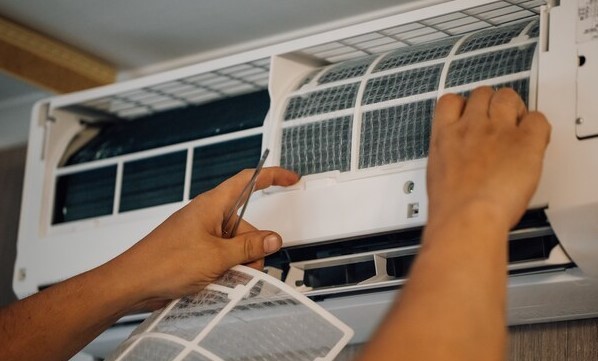
- Deep cleaning (1 to 10 years old): Is the unit less than 10 years old? Have a specialized installer perform a professional deep cleaning before moving in. This involves not only rinsing the dust filters but also treating the evaporator coils and fan blades with antibacterial mold killers.
- Replacement (> 10 to 12 years old): Is the unit older than 10 to 12 years? Manufacturers such as Daikin, Mitsubishi, and Panasonic advise replacing the system. Old units consume up to 40% to 50% more electricity, make more noise, and often use outdated refrigerants (such as R22 or R410A) that are environmentally harmful and expensive to maintain. A new unit quickly pays for itself.
2. What Does Science Say About Healthy Air Conditioning Use?
Air conditioning sometimes has a bad reputation, but medical and scientific research shows that air conditioning can actually be very healthy, provided it is used properly.
What do Doctors, ENT Specialists, and Scientists say?
- The danger of the "Cold Shock" effect: Doctors warn en masse against too large a temperature difference. If it is 33 °C outside and you set the AC inside to 18 °C, your body experiences a thermal shock. This can lead to stiff neck muscles, headaches, and reduced local resistance in your nose and throat mucosa, giving bacteria and viruses free rein.
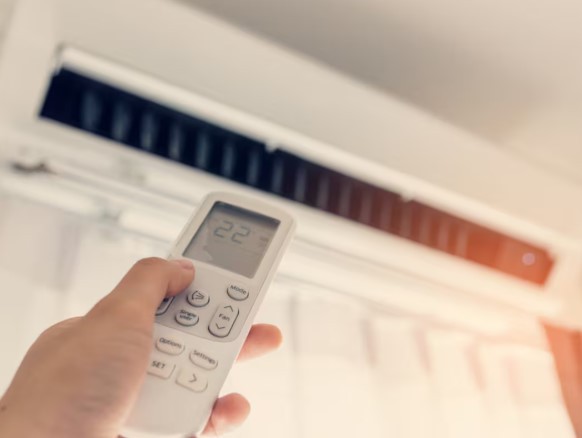
- The Ideal Temperature (Often warmer than you think!): Medical experts advise setting the indoor temperature to a maximum of 6 °C to 8 °C lower than outside. Is it 32 °C to 33 °C outside? Then a set temperature of 24 °C to 25 °C is ideal. Is it extremely hot outside? Then 28 °C or 29 °C in the office is even better! Because the air conditioner dehumidifies the muggy air, 28 °C inside feels wonderfully fresh and comfortable, while the transition to the outside is much less abrupt and therefore healthier.
- Cooling or just Dehumidifying (Dry mode)? Is it better to set the AC to dehumidification mode (the droplet icon) instead of cooling? That depends on the outdoor temperature:
- In moderate heat (up to approx. 27 °C) and high humidity: The dehumidification mode is fantastic! It removes the oppressive, clammy feeling without making the room freezing cold. It also uses less electricity and feels very natural.
- In real heat (32 °C or warmer): Dehumidifying alone is not enough. The Dry mode barely lowers the air temperature. At 32 °C outside, the compressor must run on the normal cooling mode (Cool) to physically remove the heat from the building. However, the AC automatically dehumidifies while on cooling mode!
- Optimal Humidity: It is not only the heat but especially the high humidity on the Spanish coast that makes it 'clammy'. The AC efficiently removes this moisture from the air and brings the relative humidity back to a healthy 40% to 60%.
What do Manufacturers and Installers say?
- The persistent myth: "Set it to 18 °C and it cools faster"
Many people make the mistake of setting the AC directly to the coldest setting (e.g. 16 °C or 18 °C) hoping the room will cool down faster. This is an absolute myth! An air conditioner does not blow colder air on setting 16 °C than on setting 24 °C; it simply blows air at the same temperature and just continues to run at full capacity for much longer.
- Harmful to the unit and high wear and tear:
If you set the AC to 18 °C when it is boiling hot outside, the system often cannot even reach that temperature. The compressor therefore continues to run at its maximum limit continuously. This leads to extremely high power consumption, overheating, and can severely damage the AC motor or even cause it to permanently break down.
- Running continuously at a fixed setting is more economical:
Inverter units work most efficiently when left on at a constant, realistic temperature (e.g. 24 °C – 26 °C). Once the room reaches temperature, the AC switches to an energy-efficient maintenance mode. This costs far less electricity and prevents unnecessary wear and tear.
3. How We Handle It Ourselves: From Office to Home
Because we have been living and working in Spain for two decades, we combine modern technology with traditional Spanish 'knowledge of the heat'.
At our ImmoMoment Office
When you step into our coastal office for an introductory chat, you want to be able to talk comfortably and relaxed.
- Ventilate in the morning: Every morning, we first open all doors and windows wide to thoroughly ventilate our office with fresh, oxygen-rich outdoor air.
- Then on all day: As soon as the temperature rises, we close the doors and turn on the air conditioning to a comfortable 24 °C. We leave it on all day. This is scientifically proven to be the most efficient way to keep the climate stable and pleasant without the unit having to work overtime.
At Home
At home, we try to only turn on the AC when really necessary. Our health and the natural climate come first:
- Blinds closed: As soon as the sun shines on the window, we close the roller blinds (persianas) or fully extend the awnings. That way, radiant heat doesn't even enter the home.
- Natural draft: In the evening and early morning, we open windows opposite each other to let a pleasant, natural sea breeze blow through the house.
- Tailored AC: Only during really hot summer nights or muggy afternoons does the AC go on the 'Dry' mode or a soft cooling setting.
4. Golden Maintenance Tips for Homeowners
Want your AC to last for years and keep the air pure? Stick to this maintenance schedule:
| Frequency | Maintenance Action | Why? |
| Every 1 to 2 months | Rinse filters under the tap | Prevents dust accumulation, reduces power consumption, and keeps the air clean. |
| 1x per year (before summer) | Condensate drain inspection & flush | Prevents leaks and unpleasant odors (mold). |
| Every 2 to 3 years | Professional service | The installer checks the refrigerant pressure and deeply cleans the internal system. |
Conclusion: Enjoy a Comfortable Spanish Dream Home
Air conditioning is a fantastic tool to transform your home on the Costa Blanca, Costa Cálida, or Costa del Sol into a cool oasis. By handling settings smartly (24 °C – 25 °C), performing timely maintenance, and choosing quality, you will enjoy Spanish life healthily and to the fullest.
Looking for your dream villa or apartment in Spain?
At ImmoMoment, we advise you not only on the property itself, but also on all practical and technical aspects of life under the sun. Feel free to contact us or drop by our office for a informal chat — we'll have the air conditioning comfortably set up for you!
Image gallery
Share